Elevating Digital Interfaces with Isometric 3D Shoe Set Icons
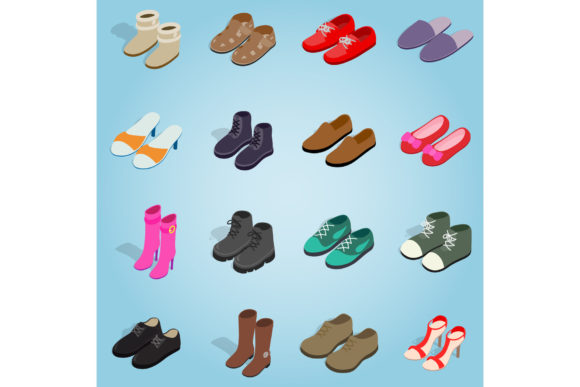
In the rapidly evolving landscape of digital design, the demand for visually engaging and functionally versatile assets has never been higher. Among the most sought-after resources for modern user interface (UI) projects are Shoe Set Icons, Isometric 3d Style. These assets represent more than just simple illustrations; they are a bridge between aesthetic appeal and practical utility, designed to enhance the user experience across web and mobile platforms. Whether you are a seasoned graphic designer, a business owner launching an e-commerce store, or a content creator looking to spice up your visuals, understanding the value of these universal shoe elements is essential.
The Rise of Isometric Design in User Interfaces
The shift towards three-dimensional aesthetics in flat digital environments has given rise to the popularity of isometric design. Unlike traditional perspective drawing, isometric projection allows objects to be displayed without converging lines, creating a clean, measurable, and highly organized look. When applied to footwear, this style transforms ordinary shoes into striking visual elements that pop off the screen.
Isometric shoe set icons offer a unique advantage: they provide depth and realism while maintaining the scalability and clarity required for small-scale UI elements. This balance makes them ideal for applications where users need to quickly identify categories, products, or actions without being overwhelmed by photographic detail. The result is a interface that feels modern, tactile, and inviting.
Core Characteristics of High-Quality Vector Illustrations
At the heart of any professional design project lies the quality of its assets. A comprehensive set of basic shoe elements vector illustration typically includes a variety of footwear types, ranging from athletic sneakers and formal dress shoes to casual loafers and rugged boots. The true power of these collections lies in their format versatility. Professional packs usually come in multiple formats, including:
- JPG: Perfect for quick previews and web usage where transparency isn't required.
- PNG: Essential for web and mobile UI, offering crisp edges and transparent backgrounds.
- EPS & AI: The industry standards for vector graphics, allowing infinite scaling without loss of quality.
- PSD: Layered files that give designers full control over lighting, shadows, and color adjustments.
Having access to these diverse formats ensures that creators can adapt the Shoe Set Icons, Isometric 3d Style to virtually any workflow. Whether you are building a responsive website or a native mobile application, the ability to tweak colors to match brand guidelines or resize icons for different screen densities is invaluable.
Practical Applications Across Industries
The utility of universal shoe icons extends far beyond simple decoration. Their application is vast, touching nearly every sector that interacts with consumers online. For e-commerce platforms specializing in fashion and footwear, these icons serve as intuitive category markers. Instead of using generic text labels, a store can use a stylized isometric sneaker to represent "Men's Athletics" or a high-heel icon for "Women's Formal," significantly reducing cognitive load for the shopper.
Furthermore, fitness and health applications benefit greatly from this visual language. A running app might use an isometric running shoe to denote activity tracking, while a lifestyle blog could incorporate these elements into infographics about shoe care or fashion trends. The 3D style adds a layer of professionalism and polish that flat icons sometimes lack, making the content feel more premium.
- Retail and E-commerce: Enhancing product categorization and navigation menus.
- Mobile App Development: Creating engaging onboarding screens and feature highlights.
- Marketing Materials: Developing eye-catching social media graphics and email headers.
- Presentation Design: Adding visual interest to corporate decks regarding retail strategies or market analysis.
Evaluating Suitability for Your Project
While the aesthetic appeal of Shoe Set Icons, Isometric 3d Style is undeniable, it is crucial to evaluate their suitability for specific project needs. Not every design context benefits from a 3D approach. For instance, in data-heavy dashboards where information density is high, simpler flat icons might be preferable to avoid visual clutter. However, for landing pages, promotional banners, and consumer-facing apps, the depth provided by isometric illustrations can guide the user's eye and create a hierarchy of importance.
When selecting a set, consider the consistency of the lighting and angle. A high-quality set of basic shoe elements vector illustration will maintain a uniform light source and perspective across all items in the collection. This consistency is vital for maintaining a cohesive brand identity. If one shoe looks like it is lit from the top left and another from the bottom right, the overall design will feel disjointed and unprofessional.
Strengths and Considerations
The primary strength of using isometric shoe set icons lies in their versatility and emotional resonance. They evoke a sense of tangibility, making digital products feel more real and accessible. Additionally, because they are often available as vector files (AI, EPS), they are future-proof. You can scale them from a tiny favicon to a massive billboard without pixelation.
However, there are considerations to keep in mind. File size can be a factor, particularly with complex PSD or high-resolution PNG files. For mobile applications where performance and load times are critical, it is advisable to optimize images or use SVG formats derived from the vector sources. Moreover, while the 3D style is trendy, design trends do shift. It is wise to choose sets with a timeless quality rather than those that rely too heavily on fleeting stylistic fads.
Real-World Scenarios and Implementation
Imagine a startup launching a new sneaker customization platform. The user journey begins with selecting a base model. By utilizing a Shoe Set Icons, Isometric 3d Style pack, the interface can display various shoe bases in a rotating, interactive carousel. The 3D nature of the icons allows users to perceive the shape and structure of the shoe immediately, even before they enter the customization engine.
In another scenario, a logistics company specializing in footwear distribution might use these icons in their internal tracking software. Different shoe types could represent different shipping categories or warehouse zones. The distinct visual characteristics of each icon help workers quickly identify packages, reducing errors and improving efficiency.
For educators and trainers in the fashion industry, these assets are excellent for creating instructional materials. Diagrams explaining the anatomy of a shoe—such as the sole, upper, laces, and heel—become much clearer when illustrated with detailed isometric vectors. Students can easily distinguish between different parts, facilitating a deeper understanding of footwear construction.
Making the Right Choice for Your Workflow
Ultimately, the decision to integrate universal shoe icons into your project should be driven by your goals and audience. If your objective is to create a memorable, engaging, and user-friendly experience, these assets are a powerful tool. They offer a blend of artistic flair and functional clarity that few other design elements can match.
When downloading or purchasing these sets, always verify the license terms to ensure they align with your intended use, whether commercial or personal. Look for packages that offer the full suite of formats—JPG, EPS, AI, PSD, PNG—to guarantee maximum flexibility. Remember, the best design assets are those that disappear into the background of a seamless user experience while simultaneously elevating the overall aesthetic.
By thoughtfully incorporating Shoe Set Icons, Isometric 3d Style into your digital ecosystem, you not only enhance the visual appeal of your project but also communicate a commitment to quality and attention to detail. In a world where first impressions are often digital, having the right visual tools at your disposal can make all the difference.