Elevating Digital Navigation: The Strategic Impact of Isometric 3D Road Sign Icons
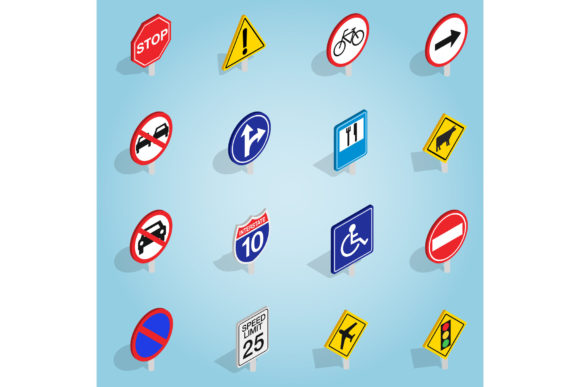
In the rapidly evolving landscape of digital design, the visual language we use to communicate with users is undergoing a significant transformation. As interfaces become more immersive and expectations for aesthetic quality rise, designers are moving away from flat, two-dimensional symbols toward richer, more dimensional assets. At the forefront of this shift is the Road Sign Set Icons, Isometric 3d Style. This collection represents more than just a stylistic choice; it is a functional evolution in how we guide users through complex digital environments. For professionals, creators, and entrepreneurs navigating the competitive markets of web and mobile development, understanding the utility and appeal of these assets is crucial for staying ahead of the curve.
Defining the Isometric Aesthetic in Functional Design
To fully appreciate the value of an Isometric road sign icons set, one must first understand the specific geometric principles that define it. Isometric projection is a method for visually representing three-dimensional objects in two dimensions, where the three coordinate axes appear equally foreshortened and the angle between any two of them is 120 degrees. Unlike perspective drawing, where objects get smaller as they recede into the distance, isometric designs maintain a consistent scale. This creates a clean, organized, and technically precise look that is highly legible on screens of all sizes.
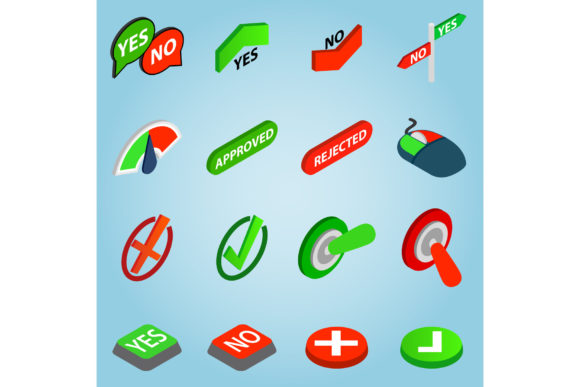
When applied to universal road sign icons, this style transforms standard regulatory and warning symbols into engaging, tactile elements. A "Stop" sign or a "Detour" arrow rendered in this style gains depth, shadow, and volume, making it pop off the screen without sacrificing clarity. The Road Sign Set Icons, Isometric 3d Style bridges the gap between playful illustration and serious utility. It offers the warmth and approachability of 3D art while retaining the immediate recognizability required for safety and navigation cues. This duality makes it an incredibly versatile tool for modern user interface (UI) design.
Aligning with Broader Industry and Market Trends
The surge in popularity of isometric assets is not an isolated phenomenon; it mirrors broader trends in technology and consumer behavior. We are currently witnessing a migration toward "spatial computing" and more immersive digital experiences. As augmented reality (AR) and virtual reality (VR) technologies mature, users are becoming accustomed to interfaces that possess depth and spatial awareness. Even within traditional 2D screens, there is a demand for visuals that feel tangible and interactive.
For marketers and business leaders, adopting a Road Sign Set Icons, Isometric 3d Style signals a brand's commitment to modernity and high-quality craftsmanship. In a saturated market where countless apps and websites compete for attention, the visual polish provided by high-fidelity 3D icons can be a key differentiator. It suggests that a company invests in the details, fostering trust and perceived value among consumers. Furthermore, as the gig economy and freelance sectors expand, independent creators are seeking assets that allow them to punch above their weight class. Access to professional-grade vector illustrations enables freelancers to deliver enterprise-level aesthetics to startups and small businesses, leveling the playing field in the creative industry.
The Shift in User Expectations and Workflow Efficiency
Why are people paying such close attention to these specific icon sets now? The answer lies in changing user expectations regarding workflow and engagement. Modern users are sophisticated; they have grown up with high-definition gaming and sleek operating systems. Flat design, while efficient, can sometimes feel sterile or generic. Users now expect interfaces to be not only functional but also delightful. An Isometric road sign icons set adds a layer of visual interest that keeps users engaged longer, reducing bounce rates and improving overall user experience (UX).
From a workflow perspective, the availability of comprehensive sets in multiple formats—such as JPG, EPS, AI, PSD, and PNG—addresses the diverse needs of contemporary design pipelines. Designers no longer need to create complex 3D models from scratch, a process that can be time-consuming and resource-intensive. Instead, they can leverage pre-made, scalable vector illustrations that integrate seamlessly into tools like Adobe Illustrator, Photoshop, and various prototyping software. This efficiency allows teams to focus on higher-level strategic decisions rather than getting bogged down in asset creation. The flexibility to switch between raster (PNG, JPG) and vector (EPS, AI) formats ensures that these icons look crisp on everything from a smartwatch display to a large-scale desktop monitor.
Practical Applications Across Industries
The versatility of universal road sign icons rendered in an isometric style extends far beyond simple navigation apps. Consider the logistics and supply chain sector. As companies strive to visualize their delivery networks and fleet management systems, isometric icons provide a clear, schematic way to represent trucks, warehouses, and route deviations. The 3D element helps distinguish between different types of vehicles or status indicators in a crowded dashboard, enhancing data readability.
In the realm of mobile gaming and educational apps, these icons serve as intuitive tutorial elements. A game teaching traffic laws or city planning can utilize a Road Sign Set Icons, Isometric 3d Style to create a cohesive world that feels constructed and real, yet stylized enough to remain approachable for learners. Similarly, in corporate presentations and infographics, these icons can break down complex logistical challenges into digestible visual stories. An entrepreneur pitching a new transportation solution can use these assets to illustrate market gaps or proposed routes with a level of professionalism that static text cannot achieve.
- Navigation Apps: Enhancing map interfaces with depth-coded warnings and directions.
- E-Learning Platforms: Creating engaging modules for driver education or urban planning courses.
- Logistics Dashboards: Visualizing fleet status and delivery routes with clear, distinct markers.
- Gaming Interfaces: Providing contextual clues and objectives within simulation games.
- Marketing Materials: Developing eye-catching social media graphics and blog headers related to travel and infrastructure.
The Technical Advantage of Vector Illustrations
A critical component of why this trend is sustainable is the underlying technology: vector illustration. Unlike raster images that lose quality when scaled up, vector files (AI, EPS) use mathematical paths to define shapes. This means an Isometric road sign icons set can be resized infinitely without any loss of resolution. For developers building responsive websites and applications that must adapt to thousands of different screen resolutions, this scalability is non-negotiable.
Moreover, the inclusion of layered files like PSD and AI grants designers granular control over every element of the icon. Colors can be adjusted to match specific brand palettes, shadows can be softened or hardened to fit the lighting of a scene, and individual components can be animated. This level of customization ensures that the icons do not look like stock assets pasted into a design, but rather like integral parts of a unique brand identity. The ability to export to PNG with transparency further simplifies the handoff to developers, ensuring that the icons blend seamlessly into any background color or texture.
Future-Proofing Your Creative Assets
As we look toward the future of digital interaction, the line between the physical and digital worlds will continue to blur. The Road Sign Set Icons, Isometric 3d Style represents a bridge between these realities. It captures the familiarity of physical signage—the universal language of the road—and translates it into a format optimized for the digital age. For professionals and enthusiasts alike, investing in high-quality, versatile asset libraries is a strategic move.
The demand for content that is both visually stunning and functionally robust shows no signs of slowing down. Whether you are a marketer looking to capture attention in a crowded feed, a developer building the next great navigation tool, or a freelancer seeking to elevate your portfolio, the integration of isometric 3D elements offers a clear path forward. By utilizing universal road sign icons that are meticulously crafted in vector formats, you ensure that your projects are not only relevant today but are also built on a foundation of quality that will endure as technology advances. The shift toward depth, clarity, and aesthetic richness is not just a trend; it is the new standard for excellence in digital communication.