Evaluating Watercolor Landscape Clipart for Creative Projects
Watercolor landscape clipart represents a specific category of digital assets designed to bring organic, hand-painted aesthetics to various creative endeavors. Unlike vector graphics or flat illustrations, these elements mimic the fluidity, transparency, and texture of traditional watercolor paints on paper. For designers, hobbyists, and small business owners, understanding the nuances of watercolor landscape clipart is essential when selecting resources for projects ranging from scrapbooking to commercial product design. This evaluation explores the practical applications, technical specifications, and strategic considerations involved in integrating these assets into your workflow.
Understanding the Asset and Its Applications
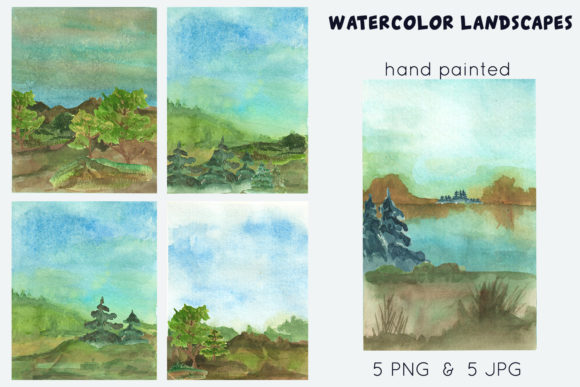
At its core, watercolor landscape clipart consists of pre-rendered images depicting natural scenery—such as mountains, forests, lakes, and skies—created with a focus on artistic expression rather than photorealism. The appeal lies in the soft edges, color blending, and the unique imperfections that characterize hand-painted art. When incorporated into digital designs, these elements add a layer of warmth and authenticity that can be difficult to achieve with standard stock photography or rigid geometric shapes.
The versatility of these illustrations makes them suitable for a wide array of uses. In the realm of scrapbook paper design, they provide evocative backgrounds that complement personal photographs without overwhelming them. For web backgrounds, particularly on blogs or portfolio sites focused on lifestyle, travel, or wellness, watercolor textures create an inviting and serene atmosphere. Furthermore, the gentle aesthetic is highly effective for invitation suites, where the goal is often to convey elegance and a personal touch for events like weddings, baby showers, or garden parties.
Beyond paper and screen, these assets are increasingly utilized in physical product design. They serve as excellent foundations for beautiful gift packaging, allowing creators to produce custom wrapping paper or gift tags that stand out in a retail environment. In the textile industry, designers use high-resolution watercolor elements to create patterns for fabrics, apparel, and home linens. Additionally, for general graphic projects, such as branding materials or social media content, these clips offer a ready-made artistic component that reduces the time required to create original illustrations from scratch.
Technical Specifications and Quality Expectations
When evaluating a collection of watercolor landscape clipart, technical quality is a primary determinant of its utility. A standard professional package, such as those offered by creators like Oksana Nowart, typically includes a ZIP file containing multiple formats to ensure compatibility with different software ecosystems. A robust set often includes around 10 hand-painted elements, split between PNG and JPG formats. The inclusion of PNG files is critical for designers who require transparent backgrounds, allowing the watercolor elements to be layered seamlessly over other colors or textures without a white bounding box.
Resolution is another vital factor. High-quality assets should be provided at 300 DPI (dots per inch), which is the industry standard for print production. For instance, a file size of A4 (2480 x 3508 pixels) ensures that the image remains crisp and detailed even when printed at full page size. This resolution is sufficient for home decor items like framed prints, postcards design, and large-format posters. Users should be wary of collections that offer only low-resolution web graphics (72 DPI), as these will appear pixelated and unprofessional when applied to physical products.
It is important to manage expectations regarding what is included in a purchase. Typically, the sale includes only the digital source files. Mockups and examples seen in product listings are strictly for demonstration purposes to show how the art might look in a real-world setting; these scene files are not part of the download. Buyers must be prepared to assemble their own compositions using design software.
Strategic Fit: When to Choose Watercolor Landscapes
Selecting watercolor landscape clipart is a strategic decision that depends heavily on the intended mood and audience of a project. This style is a strong fit when the objective is to evoke feelings of calm, nostalgia, nature, or artisanal craftsmanship. Brands in the organic food sector, eco-friendly product lines, and mindfulness apps often leverage this aesthetic to align their visual identity with values of simplicity and natural beauty.
For individuals engaged in scrapbooking or creating personalized gift packaging, these elements offer a shortcut to a polished look without requiring advanced painting skills. The "hand-painted" feel suggests effort and care, which enhances the perceived value of handmade goods. If your project involves textile printing, the soft gradients of watercolor can translate beautifully onto fabric, avoiding the harsh lines sometimes associated with digital vector art.
Tradeoffs and Considerations for Alternatives
While versatile, watercolor landscape clipart is not universally applicable. There are scenarios where alternatives may be worth considering. For projects requiring precise scalability, such as large-scale signage or logos that must remain sharp at any size, vector graphics (SVG or EPS) are superior. Watercolor raster images, even at 300 DPI, have a fixed maximum size; enlarging them beyond their native resolution will result in quality loss.
Furthermore, if a project demands a modern, tech-forward, or corporate aesthetic, the soft and organic nature of watercolor might clash with the desired brand voice. In such cases, flat design icons, geometric patterns, or high-contrast photography might be more appropriate. Additionally, users must consider color consistency. Because watercolor relies on transparency and layering, colors can shift depending on the background they are placed upon. Designers need to test their compositions carefully to ensure legibility and visual harmony.
Making an Informed Decision
To determine if a specific set of watercolor landscape clipart aligns with your goals, assess your project requirements against the file specifications. Ask yourself: Do I need transparent backgrounds for layering? Is 300 DPI sufficient for my largest intended print size? Does the artistic style match the emotional tone I wish to convey?
Purchasing from reputable artists ensures access to high-quality, original work. If you encounter uncertainties regarding file usage, licensing, or technical compatibility, reaching out to the creator directly is advisable. Many artists, including those behind collections like Oksana Nowart, welcome inquiries to help buyers make the right choice. By carefully evaluating the balance between artistic style and technical needs, you can effectively integrate these beautiful elements into your graphic projects, enhancing everything from home decor to professional marketing materials.