Evaluating Large Recycling Bins Flat Color Objects for Design Projects
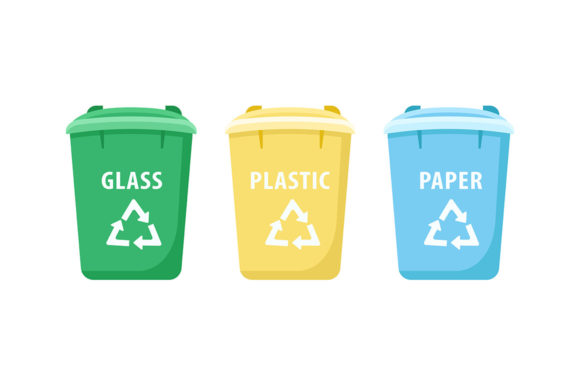
In the realm of digital graphic design and web development, visual assets play a critical role in communicating complex ideas quickly and effectively. Among these assets, Large Recycling Bins Flat Color Objects have emerged as a staple for projects focusing on sustainability, waste management, and environmental education. These vector illustrations typically depict oversized waste containers designed for separating materials like paper and glass, rendered in a simplified, two-dimensional style without gradients or shadows. Understanding the utility, limitations, and appropriate applications of these specific graphic elements is essential for designers, content creators, and project managers looking to enhance their visual storytelling regarding ecological responsibility.
Defining the Asset Category
When professionals refer to Large Recycling Bins Flat Color Objects, they are describing a specific subset of stock illustration. Unlike photorealistic images or intricate 3D renders, these objects utilize a "flat" design philosophy. This means the artwork relies on solid blocks of color, clean lines, and geometric shapes to represent the subject matter. The "large" descriptor often implies that the bins are depicted as industrial or communal-sized containers rather than small household units, making them suitable for illustrating public spaces, offices, or municipal waste systems.
These assets are frequently distributed as part of a waste containers isolated cartoon illustration collection. The term "isolated" indicates that the objects are presented against a transparent background, allowing for seamless integration into various layouts without the need for complex masking or editing. A standard package for such resources often includes a ZIP file containing multiple file formats, most notably EPS (Encapsulated PostScript) for scalable vector editing and JPG for immediate raster use. This dual-format approach ensures compatibility with both professional design software like Adobe Illustrator and general-purpose tools used for web uploads.
Strategic Reasons for Adoption
There are several compelling reasons why a designer or organization might choose this specific style of illustration over other visual options. The primary driver is often clarity and universality. Flat color designs strip away unnecessary details that can distract the viewer, focusing attention solely on the function of the object: separation of waste. In the context of paper and glass waste separation, clear visual cues are vital. A flat icon of a blue bin for paper and a green or brown bin for glass communicates the intended action instantly, transcending language barriers.
Furthermore, performance is a significant factor in web graphic design. Vector-based flat objects are generally lightweight in terms of file size compared to high-resolution photography. When used in an animation collection, these simple shapes are easier to rig and animate, resulting in smoother motion graphics that load quickly on mobile devices and slower connections. For websites aiming to educate users on recycling protocols without compromising page load speeds, these assets offer a practical solution.
Benefits and Practical Advantages
The advantages of utilizing a Large recycling bins flat color vector objects set extend beyond aesthetics. One of the most significant benefits is scalability. Because the core files are often in EPS format, the images can be resized infinitely without losing quality. Whether the graphic is needed for a small favicon or a massive billboard display, the vector data ensures crisp edges and consistent color fidelity.
Customization is another key benefit. Flat color objects are inherently easy to modify. If a brand requires specific corporate colors to match their sustainability initiative, a designer can easily recolor the bins within seconds. This flexibility allows the assets to align perfectly with existing brand guidelines, something that is much more difficult to achieve with photographic stock images where lighting and color balance are fixed.
Additionally, the cartoonish or illustrative nature of these objects can make the topic of waste management feel more approachable and less sterile. For educational materials targeting children or community outreach programs, a friendly, stylized illustration can engage the audience more effectively than a gritty photo of a dumpster.
Tradeoffs and Considerations
While the benefits are substantial, it is important to acknowledge the tradeoffs involved in choosing flat color objects. The primary limitation is the lack of texture and depth. In contexts where realism is required to convey the gravity of pollution or the physical condition of waste infrastructure, a flat cartoon illustration may appear too trivial or disconnected from reality. If the goal is to evoke an emotional response through visceral imagery, photorealism remains the superior choice.
Another consideration is the potential for oversimplification. Waste management systems vary significantly by region. A generic flat icon might not accurately represent the specific types of bins used in a particular municipality. Designers must ensure that the visual representation matches the local reality to avoid confusing the end-user. For instance, if a local program requires separate bins for plastics and metals, but the asset set only shows paper and glass, the illustration could inadvertently mislead the audience.
Ideal Use Cases
Certain scenarios are particularly well-suited for Large Recycling Bins Flat Color Objects. These include:
- Web Infographics: Explaining the recycling process step-by-step where clarity and flow are paramount.
- Mobile App Interfaces: Where screen real estate is limited, and icons need to be recognizable at small sizes.
- Educational Animations: Creating engaging videos for schools or public service announcements where character-like movement of objects is desired.
- Corporate Sustainability Reports: Providing clean, professional visuals that break up text-heavy documents without introducing visual noise.
- Signage and Wayfinding: Designing digital signs for offices or public venues to indicate waste disposal stations.
In these situations, the abstraction provided by flat design aids comprehension and maintains a cohesive visual language throughout the project.
When to Consider Alternatives
Conversely, there are situations where alternatives may be worth considering. If the project involves a high-end marketing campaign for a luxury eco-brand that relies on tactile, organic feelings, textured illustrations or high-quality photography might better convey the premium nature of the product. Similarly, for technical manuals aimed at waste management facility operators, detailed diagrams or photographs showing mechanical parts and specific safety features would be more appropriate than a stylized cartoon bin.
Moreover, if the target audience has low visual literacy regarding abstract symbols, more literal representations might be necessary. While flat design is generally intuitive, some demographics may struggle with highly stylized icons, necessitating a more realistic approach to ensure the message is received correctly.
Making the Decision
Selecting the right visual assets ultimately depends on the specific goals of the project and the needs of the audience. When evaluating whether to incorporate a Large recycling bins flat color vector objects set into your workflow, ask yourself: Does the priority lie in speed, scalability, and clarity? If the answer is yes, these assets are likely a strong fit. They excel in environments where information needs to be digested quickly and where consistency across different media formats is required.
However, if the project demands emotional depth, hyper-realism, or specific regional accuracy that generic vectors cannot provide, investing in custom photography or detailed 3D rendering may yield better results. By weighing the need for aesthetic simplicity against the requirement for detail, designers can make informed decisions that enhance the effectiveness of their environmental communication strategies. The availability of versatile formats like EPS and JPG in standard ZIP packages further lowers the barrier to entry, making these objects a practical and efficient choice for a wide array of modern design challenges.