Integrating Blue Mushrooms Forest - Patterns into Professional Design Workflows
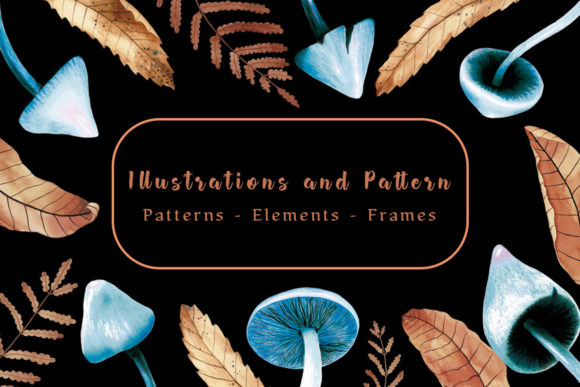
In the realm of digital design and brand development, the selection of visual assets is rarely an afterthought; it is a foundational decision that dictates the tone, usability, and scalability of a project. For professionals ranging from freelance graphic designers to small business owners managing their own marketing materials, the challenge often lies not in finding imagery, but in finding cohesive systems that adapt to diverse output requirements. The Blue Mushrooms Forest - Patterns collection addresses this specific need by offering a versatile asset pack designed to bridge the gap between conceptual creativity and technical execution. This resource is not merely a set of images; it is a structured toolkit intended to streamline the production of web graphics, print collateral, and digital publications.
Understanding where this collection fits within a broader creative process requires looking at the lifecycle of a typical design project. Whether you are developing a new brand identity, launching a seasonal marketing campaign, or creating educational materials, the integration of high-quality patterns and frames occurs at multiple stages. The Blue Mushrooms Forest - Patterns suite provides the necessary flexibility to be utilized during the initial mood-boarding phase, the active design construction, and the final export preparation. Its value proposition centers on the dual availability of RGB and CMYK color profiles, ensuring that the distinctive blue mushroom motifs retain their integrity whether viewed on a smartphone screen or reproduced on physical packaging.
Strategic Implementation Across Project Phases
The utility of the Blue Mushrooms Forest - Patterns extends beyond simple decoration; it serves as a functional component in workflow optimization. When initiating a project, particularly one requiring a distinctive touch, designers often spend excessive time searching for compatible elements. By utilizing this collection early in the planning stage, teams can establish a consistent visual language immediately. The inclusion of three unique patterns allows for variation without sacrificing cohesion. For instance, a marketer might use one pattern for social media backgrounds, a second for email newsletter headers, and the third for website section dividers. This approach ensures brand consistency while preventing visual fatigue among the audience.
During the execution phase, the technical specifications of the assets become critical. The collection includes four pattern repetition modules provided in JPG format at 300 DPI. This resolution is essential for maintaining sharpness in high-definition displays and print applications. For web-based projects, the RGB profile ensures accurate color reproduction on screens, avoiding the dullness that can occur when CMYK files are improperly converted for digital use. Conversely, for printed materials such as brochures, business cards, or product packaging, the CMYK versions are pre-calibrated to minimize color shifting during the printing process. This dual-profile structure eliminates a common bottleneck in the workflow: the need for manual color space conversion, which often leads to errors and delays.
Furthermore, the collection supports the creation of comprehensive visual identities through its supplementary elements. The set includes three transparent frames available in PNG format. These frames are designed to overlay onto backgrounds of the user's choice, providing a structured border that enhances the professional appearance of documents and presentations. Because they utilize transparency, they integrate seamlessly into existing layouts without requiring complex masking or editing. This feature is particularly valuable for educators and publishers who need to frame text or images within a thematic context quickly. The ability to drop these frames onto any background accelerates the layout process, allowing creators to focus on content rather than structural design.
Technical Compatibility and Asset Organization
Efficient workflow management relies heavily on the organization and compatibility of digital assets. The Blue Mushrooms Forest - Patterns collection is structured to support immediate deployment across various software environments. The inclusion of four digital A4 papers with applied patterns, sized at 2480x3508 pixels in JPG format, offers a ready-to-use solution for document design. These files are optimized for standard page dimensions, making them ideal for reports, flyers, and stationery. Since they are provided at 300 DPI in RGB, they serve as excellent masters for digital distribution or as a base for further editing before converting to print-ready formats.
For more granular control, the package contains 15 separate elements with transparency, also in PNG format at 300 DPI. These individual components allow designers to construct custom scenes or illustrations that go beyond the predefined patterns. This modularity is crucial for entrepreneurs and hobbyists who may need to create unique graphics for specific campaigns without commissioning custom artwork. By having access to isolated elements, users can manipulate scale, rotation, and layering to suit specific compositional needs. This level of flexibility ensures that the assets do not feel repetitive, even when used across multiple projects over an extended period.
Integration with existing tools is straightforward. The JPG and PNG formats are universally supported by industry-standard software such as Adobe Photoshop, Illustrator, Canva, and Affinity Designer. This compatibility means that there is no learning curve associated with importing these assets. Professionals can drag and drop the pattern modules into their preferred workspaces and begin tiling or masking immediately. The high resolution ensures that scaling up for large-format prints, such as banners or trade show displays, does not result in pixelation. This reliability reduces the risk of last-minute redesigns due to poor asset quality, a common pain point in tight-deadline scenarios.
Quality Control and Long-Term Usability
Maintaining quality control throughout a project is paramount, especially when dealing with mixed media outputs. The Blue Mushrooms Forest - Patterns collection aids in this regard by providing consistent color standards. The distinction between the web-optimized RGB files and the print-ready CMYK modules allows for precise management of color expectations. Designers can preview how the blue hues will appear in different mediums before committing to a final output. This foresight prevents costly reprints and ensures that the brand's visual identity remains stable across all touchpoints.
Long-term usability is another significant factor for professionals investing in digital assets. Unlike trend-heavy graphics that may become obsolete quickly, the botanical theme of blue mushrooms offers a timeless aesthetic that blends nature with a touch of fantasy. This makes the collection suitable for a wide range of industries, from wellness and skincare to technology and education. The versatility of the patterns means they can be repurposed for future projects, maximizing the return on investment. For small business owners and freelancers, building a library of such adaptable resources is a strategic move that enhances productivity over time.
Moreover, the organizational structure of the files facilitates easy retrieval and reuse. With clear distinctions between pattern modules, full-page papers, frames, and individual elements, users can quickly locate the specific asset needed for a task. This efficiency is vital in fast-paced environments where time spent searching for files directly impacts profitability. The high DPI of all assets ensures that they remain relevant even as display technologies and printing standards evolve, protecting the user's library from becoming outdated.
Practical Tips for Maximizing Workflow Efficiency
To fully leverage the potential of the Blue Mushrooms Forest - Patterns, consider adopting a systematic approach to asset integration. Begin by auditing your current project requirements to determine whether the output is primarily digital or physical. If the project involves both, utilize the respective RGB and CMYK files from the start to avoid cross-conversion issues. When designing for web, experiment with the transparency of the PNG frames to create layered effects that add depth to flat designs. For print projects, use the A4 digital papers as a base layer to ensure that the pattern alignment is perfect before adding text or other graphical elements.
- Preparation: Organize the downloaded folders by file type (JPG, PNG) and color profile (RGB, CMYK) before starting the design process to streamline access.
- Consistency: Select one primary pattern from the three available options to serve as the dominant theme, using the others sparingly for accent areas to maintain visual harmony.
- Scalability: Utilize the 15 separate elements to create custom icons or bullet points that match the overall theme, enhancing the uniqueness of the final deliverable.
- Verification: Always proof digital mockups on actual devices and request physical proofs for print jobs to verify that the blue tones translate accurately in the intended medium.
In conclusion, the successful integration of visual assets like the Blue Mushrooms Forest - Patterns hinges on understanding their technical capabilities and aligning them with project goals. By providing a comprehensive set of high-resolution, color-profile-specific resources, this collection empowers creators to execute their visions with precision and efficiency. Whether used to enhance a corporate presentation, design a product label, or decorate a digital blog, these tools offer the reliability and aesthetic appeal required in today's competitive landscape. Embracing such well-structured resources allows professionals to focus less on technical hurdles and more on the creative strategies that drive meaningful results.